

Hampshire County Council (HCC) has formally commenced legal proceedings challenging the Government’s local government reorganisation plans for Hampshire and the Solent, including splitting the New Forest in two.
The county council has estimated the legal proceedings, named a judicial review, could cost up to £500,000.
There is no guarantee the challenge will be successful. Even if it succeeds, it will not automatically prevent the Government’s plans from moving forward.
Despite opposing proposals which would see the Waterside transferred into a Southampton-centred authority, New Forest District Council (NFDC) has decided not to pursue legal action.
The council published legal advice which concluded such a challenge had no realistic prospect of success.
Both authorities took legal advice. Both oppose the Government’s plans. So why have they reached different conclusions?
What has happened?
The Government is currently progressing plans to replace Hampshire’s existing two-tier system of county and district councils with a smaller number of larger unitary authorities.
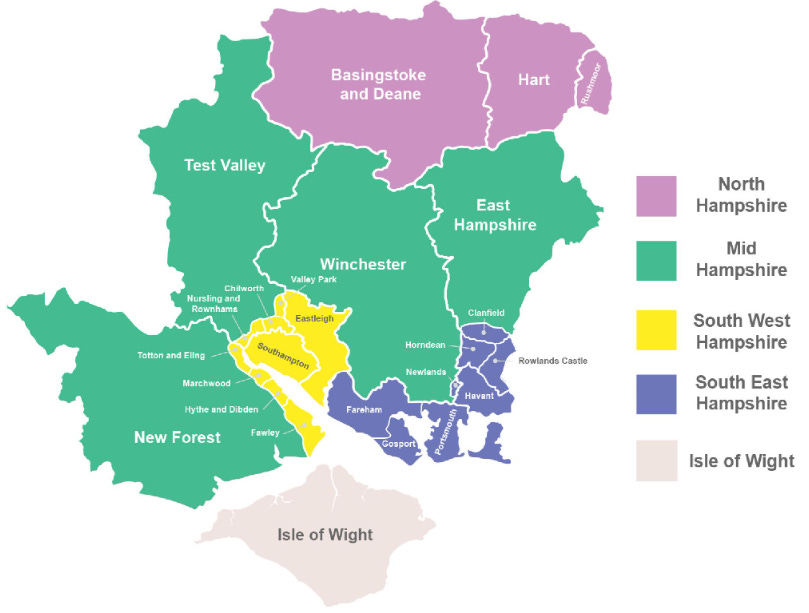
Earlier this year ministers selected their preferred option for Hampshire and the Solent, known as Option 1A, which would replace the 15 existing councils with five new unitary authorities.
The proposal includes transferring the Waterside area away from the New Forest into a Southampton-centred authority in 2028.
The decision has proved controversial locally and prompted opposition from campaign groups, residents and local MPs.
During a recent parliamentary debate, New Forest East MP Sir Julian Lewis described the move as a “land grab”.
While both HCC and NFDC oppose the proposals, they have taken very different approaches to challenging them.
Why is Hampshire County Council pursuing a judicial review?
In a statement announcing the legal challenge, Leader of HCC, Councillor Nick Adams-King said starting proceedings is not a step the council “have taken lightly”.
HCC believes it has “proper grounds” to challenge the decision and has raised questions about how the Government reached its conclusion and whether ministers had sufficient evidence to justify their preferred option.
The council leader said the authority had repeatedly sought further clarification from the Government, and the lack of explanation has now triggered the formal proceedings.
“We fully recognise the cost of legal action, but that must be set against the potentially far greater cost of getting reorganisation wrong.”
Hampshire County Council Leader, Cllr Nick Adams-King
The council argues the cost of legal action must be weighed against the potential long-term financial consequences of implementing an unsustainable structure.
Adams-King said: “We fully recognise the cost of legal action, but that must be set against the potentially far greater cost of getting reorganisation wrong.”
HCC says the judicial review is intended to establish whether the Government’s decision was transparent, properly reasoned and supported by the available evidence.
The county council has now formally commenced proceedings.
HCC is not alone in pursuing legal action. Portsmouth City Council also voted to formally take action and begin a judicial review process.
Hampshire County Council was approached for comment and referred New Forest Dispatch to Cabinet papers, meeting discussions and previously published information relating to its decision.
Why is NFDC not pursuing a judicial review?
Despite strongly opposing the Government’s decision to transfer the Waterside from the New Forest to Southampton’s new authority, New Forest District Council has decided not to pursue legal action.
The council said it explored all potential grounds for a judicial review and obtained two independent legal opinions before reaching its decision.
Speaking at a Cabinet meeting on June 3, NFDC leader Councillor Jill Cleary said the authority had “left no stone unturned” in examining whether the Government’s decision could be challenged.
She told councillors they had sought to identify “any possible grounds of challenge” before making a recommendation.
“Option 1A was a mistake, but the legal advice showed that the Government had the ability to impose that mistake.”
New Forest District Council Leader, Cllr Jill Cleary
Given the significant public interest in the issue, the council also commissioned a second independent opinion from King’s Counsel.
According to Cabinet documents, this was intended to ensure the council had “tested the position thoroughly” before deciding whether to pursue a judicial review.
However, both legal advisers reached the same conclusion - that there was no realistic prospect of convincing a court that the Government had made a legal error when reaching its decision.
Cleary said the advice also highlighted an important limitation of judicial review.
“A judicial review would not be a re-run of the Government’s decision,” she told the meeting, adding that even if a challenge succeeded there was “no guarantee” the Government would ultimately reach a different conclusion.
While continuing to oppose the Government’s decision to split the New Forest, Cleary said the legal advice indicated there was no realistic prospect of a successful judicial review to challenge the upcoming changes.
“Option 1A was a mistake,” Cleary said, “but the legal advice showed that the Government had the ability to impose that mistake.”
Cabinet papers state that councillors considered “the best way to represent the interests of the New Forest and its communities” was not to pursue legal action.
Instead, the council says it will focus efforts on “championing” the New Forest’s needs through the transition to new authorities.
In response to questions from New Forest Dispatch, NFDC referred to recently published legal advice considered by Cabinet before its decision not to pursue a judicial review.
Why this matters to residents
The issue of local government reorganisation has generated strong public interest locally.
In a recent New Forest Dispatch survey which received more than 200 responses, the local government changes were identified as the most significant issue currently facing the New Forest.
Read more on issues facing residents here…

Why have Hampshire and New Forest reached different conclusions?
At the heart of the disagreement is a simple question - why have two councils opposing the same Government decision reached different conclusions about whether it should be challenged in court?
NFDC’s position is based on two independent legal opinions which concluded there was little chance of success.
HCC, however, reached a different conclusion after taking its own legal advice.
Ultimately, both councils oppose the Government’s preferred reorganisation proposals.
The difference lies in the councils’ assessment of whether a judicial review offers a realistic route to challenging the decision.
Other councils have taken different views on how best to respond to the Government’s decision.
Speaking at Southampton City Council’s Overview and Scrutiny Management Committee on June 11, the new council leader Sarah Bogle said, “I think we need to all move on and accept the decision. And actually, just focus on how to make the decision work for us on the ground.”
This contrasts with many residents’ views, HCC’s judicial review proceedings, and New Forest Together’s continued campaign against the proposed changes.
Campaign group says councils faced different legal positions
Campaign group New Forest Together said HCC and NFDC were in “fundamentally different positions, both legally and operationally”.
Speaking to New Forest Dispatch, Campaign Coordinator James Hartley-Binns said HCC was “well-placed to challenge” the Government’s decision because it is responsible for the public services most affected by the reorganisation and holds “the detailed financial and service-delivery data that underpins those functions”.
He said both councils were “acting consistently with the legal advice they received and the evidence available to them”.
New Forest Together said its own independent legal advice identified concerns about the Government’s decision-making process, including questions around financial viability, public service sustainability and how consultation responses were considered.
The group said it would regard a successful outcome as the Government reopening discussions on local government reorganisation and reconsidering its preferred option.
Their aim remains to keep the New Forest together.
If HCC’s judicial review is unsuccessful, New Forest Together said they would continue campaigning during the transition process, scrutinising decisions affecting the New Forest and advocating for future boundary changes.
So, what happens now?
As HCC is now formally commencing the judicial review process, the next stage will be for the courts to decide whether the challenge can proceed.
A judicial review does not determine whether a decision was right or wrong, but whether it was reached lawfully.
Even if HCC were successful, this would not automatically overturn the Government’s plans to split the New Forest.
Instead, the Government could be required to look at the decision again before deciding whether to proceed.
The judicial review for HCC may ultimately succeed or fail.
However, the decision has already exposed a significant divide between Hampshire’s councils, with authorities that oppose the same Government proposals taking very different approaches to challenging them.
New Forest Dispatch will continue following developments on local government reorganisation and what it means for New Forest residents.